
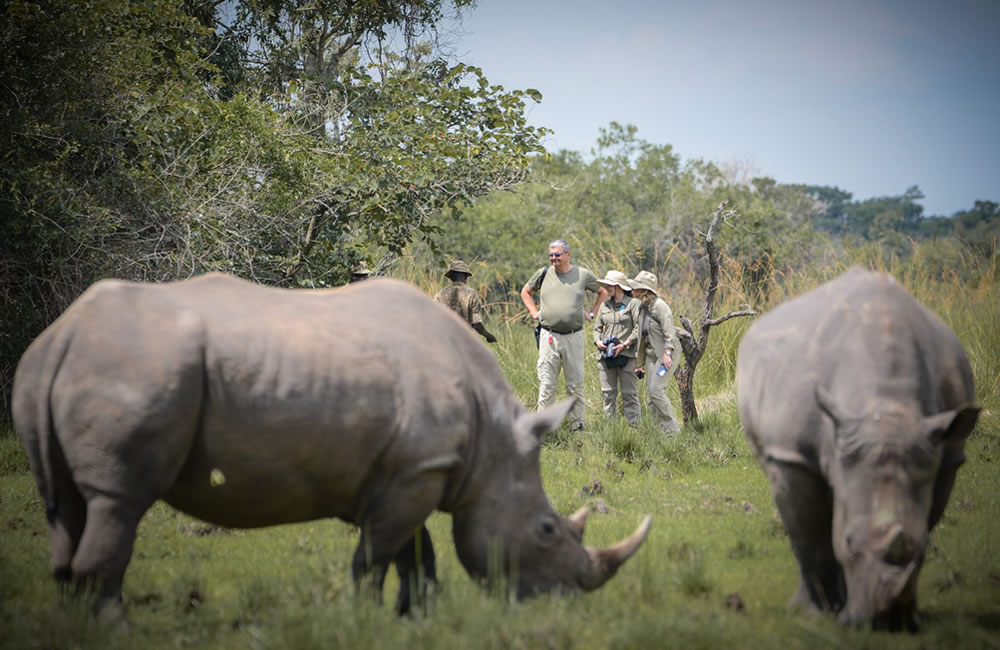
Rhino tracking at Ziwa Rhino Sanctuary is one of the most unique wildlife experiences in Uganda. Located along the Kampala–Gulu highway, the sanctuary is the only place in the country where visitors can see rhinos in the wild after they became extinct in Uganda in the early 1980s. Today, Ziwa plays a crucial role in rhino conservation and offers visitors the rare opportunity to track these magnificent animals on foot. Understanding a few important aspects of the experience can help visitors prepare for the next Uganda safari encounter.
- Ziwa Rhino Sanctuary is the only place to see Rhinos in Uganda
Rhinos disappeared from Uganda due to poaching and civil unrest decades ago. Ziwa Rhino Sanctuary was established to reintroduce and protect the species in a safe environment. The sanctuary covers about 70 square kilometers of savannah, woodland, and wetlands, protected by electric fencing and monitored by rangers around the clock.
The sanctuary is home to a growing population of southern white rhinos, whose numbers have steadily increased through successful breeding programs. The ultimate goal of the project is to eventually reintroduce rhinos into Uganda’s national parks, such as Murchison Falls National Park.
- Rhino tracking is done on foot
Unlike most safari experiences where wildlife is viewed from a vehicle, rhino tracking at Ziwa is conducted entirely on foot. Visitors walk through the bush with trained rangers who guide them safely to where the rhinos are grazing or resting.
Tracking rhinos on foot creates a more immersive and exciting experience because visitors can observe the animals closely while learning about their behavior, conservation, and habitat.
- The experience usually lasts 1–2 hours
Rhino tracking typically takes between one and two hours, depending on the location of the animals on that particular day.
The tracking team first drives visitors to the general area where the rhinos were last seen. From there, the group walks quietly through the bush until the rhinos are located. Once found, visitors are allowed to observe them for some time while the ranger explains interesting facts about the species.
- Visitors can get very close to the rhinos
One of the most exciting aspects of the activity is how close visitors can get to the animals. Tourists are usually allowed to approach to about 6–10 meters from the rhinos under the guidance of the ranger.
Although white rhinos are generally calm animals, they are still wild and powerful creatures. Maintaining a safe distance is important to avoid disturbing them or triggering defensive behavior.
- Safety rules must be followed
Before the walk begins, all visitors receive a briefing about safety and behavior in the sanctuary. Some important rules include:
- Follow the ranger’s instructions at all times.
- Remain quiet and avoid sudden movements.
- Do not feed, touch, or disturb the animals.
- Avoid flash photography and loud noises.
- Do not litter in the sanctuary.
These guidelines help protect both visitors and wildlife while ensuring the animals remain comfortable in their natural environment.
- The best time to track rhinos
Rhino tracking is best done during the cooler hours of the day when the animals are most active. Morning sessions usually start around 8:00 AM, while afternoon sessions take place between 4:00 PM and 6:00 PM.
During the hottest part of the day, rhinos often rest in shaded areas or mud pools, which can make them harder to locate.
- What to wear and carry during the experience.
Proper preparation makes the experience more comfortable. Visitors are advised to bring:
- Long trousers and long-sleeved shirts
- Strong walking shoes or hiking boots
- Drinking water and snacks
- A hat and sunglasses
- Insect repellent and sunscreen
- A camera or binoculars
Since the tracking involves walking through grassland and bush, protective clothing helps guard against insects and thorns.
- Rhino tracking supports conservation
Every rhino tracking permit contributes directly to conservation efforts at the sanctuary. Funds help support anti-poaching patrols, habitat protection, and breeding programs that aim to restore rhinos to Uganda’s national parks in the future.
By participating in rhino tracking, visitors not only enjoy an unforgettable wildlife experience but also help protect one of Africa’s most endangered species.
- Other wildlife and activities at Ziwa
Although rhinos are the main attraction, the sanctuary also hosts a variety of wildlife and birds. Visitors may see animals such as Uganda kobs, bushbucks, waterbucks, and several primates. In addition, the area is famous for bird watching, with over 300 bird species, including the rare shoebill stork.
Other activities offered at the sanctuary include nature walks, shoebill tracking, bird watching, canoe rides, and night walks.
Conclusion
Rhino tracking at Ziwa Rhino Sanctuary is a remarkable wildlife adventure that lets visitors walk through the African wilderness and encounter one of the continent’s most iconic animals up close. Beyond the thrill of seeing rhinos in their natural habitat, the experience underscores the importance of conservation and the efforts underway to restore these magnificent creatures to Uganda’s wild landscape.